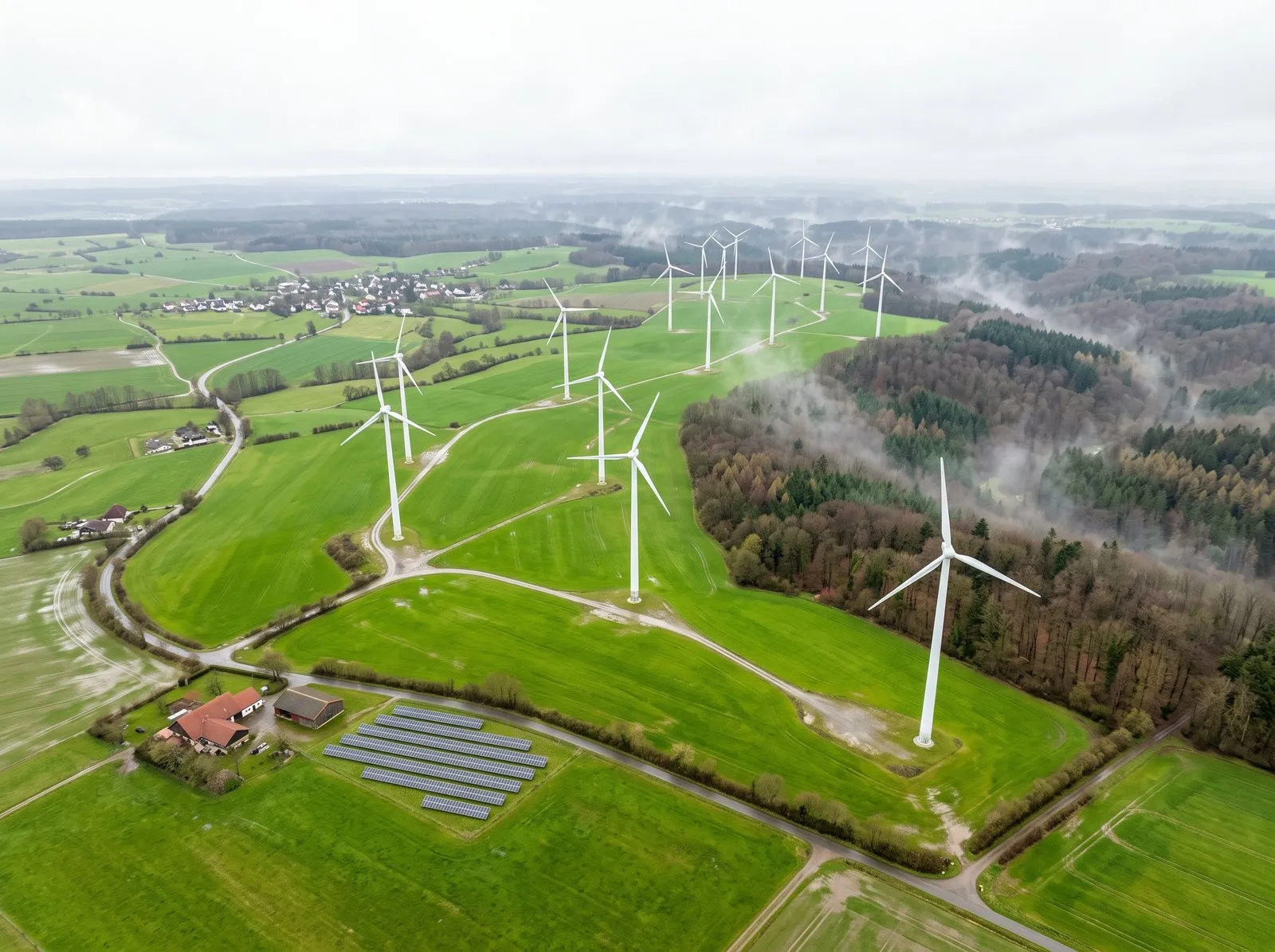
A virtual power plant, or VPP, coordinates distributed energy resources as a portfolio. Generation, storage and flexible demand can contribute, but the portfolio's capabilities depend on the actual devices, control arrangements and operating constraints. A VPP is an operating concept rather than one universal product design. Renewable forecasts supply expected production information within that concept; they do not themselves control the assets.
From individual assets to a portfolio
Distributed resources can sit at different locations and measurement points. The operator needs a consistent view of their identities, capacity, availability and connection constraints. Aggregating their readings is only the beginning. To represent the portfolio as an actionable resource, the system also needs to know what can change, when it can change and for how long.
A controllable battery differs from a wind farm whose available output follows the weather. Flexible demand differs from a generator because shifting consumption can create a later obligation or a customer constraint. Avoid describing the whole portfolio with one installed-capacity number. The useful quantity is the feasible response under the conditions of the intended decision.
Forecasts, telemetry and control serve different roles
Telemetry describes observed device or plant behaviour. A forecast estimates future production or demand. A scheduling process chooses a plan, and a control system issues actions to capable devices. These functions need compatible identifiers and timestamps, but they are not interchangeable. A received forecast does not establish that an instruction was delivered or followed.
For wind and solar assets, define whether the forecast represents available generation or expected metered export. Known outages and production restrictions can make these quantities differ. For a storage device, state of charge and charging limits matter alongside expected renewable generation. A generation trace alone cannot determine a feasible battery schedule.
Match the horizon to the decision
An earlier production forecast can support portfolio scheduling. A later update can reveal a changed expectation before delivery. Very short-term information may support another operating process, if it arrives before that process's cutoff. Each use needs its own lead time and latency requirements rather than a single maximum forecast horizon.
Store the issue and receipt time of every version. When evaluating a historical decision, use the forecast available then, not a later revision. This is especially important when a VPP combines several feeds: apparently synchronized delivery intervals can hide different ages of the underlying information.
Aggregation changes uncertainty
Errors at different assets can offset, but shared weather can also make them move together. A portfolio total may therefore have different accuracy from its individual sites. Assess both views. Portfolio performance can be relevant to a commercial decision while site-level results reveal an operational or data problem that still needs attention.
For a decision involving a sequence of actions, coherent scenarios across time are more useful than independently selecting a low or high value in every interval. Storage headroom can be consumed by earlier decisions. Flexible demand may need recovery later. The uncertainty analysis should preserve those relationships instead of treating every interval as a separate opportunity.
Evaluate the complete workflow
Start with an asset register, measured data, capacity history and status records. Align interval boundaries and define how missing or stale information is handled. Compare forecast quality at the actual decision horizons against a relevant baseline. Then assess the scheduling or control policy separately, respecting the physical and contractual constraints of the participating resources.
Run a degraded-data exercise before relying on the integration. Delay a feed, mark a device unavailable and replay a capacity change. Check that the operator can identify the affected assets and that downstream decisions use the intended fallback. Quiet delivery of an outdated value should not be mistaken for a healthy forecasting service.
The practical buying question is which information a particular VPP needs to make a particular decision. Confirm asset coverage, output definitions, update timing and integration requirements with the forecast provider. Keep market participation, dispatch capability and commercial outcomes separate from forecast availability. This makes the forecast's role testable without promising that it operates the portfolio or guarantees revenue.